
Small and medium-sized enterprises (SMEs) face an unprecedented set of challenges in today’s modern digital marketplace. Competing directly against multi-million-dollar corporate advertising budgets, global retail platforms, and deeply entrenched industry incumbents often feels like David taking on Goliath. Traditional marketing channels—ranging from physical billboard displays and print publication ads to continuous pay-per-click (PPC) digital media campaigns—heavily favor enterprises with virtually bottomless financial resources. The fundamental structural flaw of paid acquisition channels is their binary nature: the exact moment a smaller company pauses or stops funding its paid advertising account, its digital footprint, incoming website traffic, and sales lead streams vanish completely overnight.
Search Engine Optimization (SEO) fundamentally alters this unfair dynamic by leveling the online playing field for growing companies. Unlike paid advertising channels that demand non-stop capital injections to maintain basic online visibility, SEO for small businesses functions as a strategic investment in sustainable, compounding digital equity. When designed and executed with precision, search engine optimization empowers agile, specialized, and regional businesses to capture high-intent prospective clients at the precise moment they are actively seeking solutions to immediate operational challenges.
At SeeSam Solutions, we specialize in helping growing companies leverage strategic technology platforms, workplace hardware ecosystems, and data-driven digital initiatives to streamline internal operations and maximize market penetration. Search Engine Optimization represents one of the single most reliable engines for long-term commercial growth, systematically converting standard search engine result pages (SERPs) into dependable, high-converting revenue streams for expanding enterprises.
Understanding the Small Business Digital Landscape and Acquisition Challenge
───────────────────────────────────────────────────────
To fully appreciate how emerging brands can compete online with SEO, leadership teams must first examine the deep structural headwinds smaller companies face within standard digital customer acquisition models:
- Severe Budget Asymmetry in Paid Channels: Enterprise competitors frequently deploy massive PPC funds that artificially inflate Cost-Per-Click (CPC) benchmarks across platforms like Google Ads and LinkedIn. This aggressive bidding prices lean organizations out of primary keyword auctions, making reliance on ad networks financially risky.
- Built-In Enterprise Brand Preference and Market Familiarity: Legacy brands profit from decades of name recognition, generating thousands of direct navigational searches every month. Growing businesses must deliberately build domain authority and online credibility to gain equivalent user trust.
- Evolution of Modern Buyer Research Habits: Contemporary B2B and B2C buyers rarely make immediate purchasing decisions based on static promotional ads. Over 85% of modern decision-makers perform extensive organic search research across multiple digital touchpoints before ever reaching out to a sales representative or placing an order.
- High Customer Churn in Interrupted Ad Models: Interruption-based display marketing yields declining click-through rates as ad fatigue increases across web users, whereas search engines present solutions when user interest is at its absolute peak.
Without a structured, discoverable digital footprint, small businesses risk being entirely omitted from potential buyers’ consideration sets simply because they are invisible during crucial early research phases.
1. Demystifying SEO: Sustainable Organic Equity vs. Paid Advertising
───────────────────────────────────────────────────────
| Strategic Dimension | Pay-Per-Click (PPC) Advertising | Organic Search Engine Optimization (SEO) |
| Speed of Results | Immediate (Active as soon as ad spend starts) | Gradual (Builds strong momentum over 3–6 months) |
| Cost Dynamics | Linear recurring cost per visitor clicked | Upfront asset building with decreasing long-term cost-per-lead |
| Long-Term Digital Value | Zero residual asset value once budget stops | High domain authority with persistent compounding organic traffic |
| User Trust & Click-Throughs | Lower average CTR (5%–15% on ad blocks) | Higher user trust with premium position 1–3 CTRs exceeding 30% |
| Scale Potential | Restricted directly by monthly ad budget limits | Exponential growth capacity as domain relevance expands |
Search Engine Optimization encompasses the strategic practice of refining a website’s technical architecture, content relevancy, user experience design, and backlink authority profiles so search engines like Google index and rank its pages prominently for high-value search queries.
While pay-per-click ad networks yield temporary spikes in web traffic, they essentially force businesses to rent an audience. Organic search engine optimization, by contrast, creates real digital real estate. A properly structured web architecture—reinforced with high-value technical documentation, educational blog articles, and strategic solution landing pages—continues to generate qualified sales leads years after the initial publication period.
2. Capturing High-Intent Leads at Significantly Lower Acquisition Costs
───────────────────────────────────────────────────────
Generic advertising campaigns broadcast broad promotional messages to large, unsegmented audiences who may have zero current need for your services. In stark contrast, search engine optimization captures prospective clients who are actively seeking direct answers to immediate operational problems or workplace equipment requirements.
When a corporate operations manager or purchasing officer types highly specific search queries such as “enterprise document management software integration” or “heavy-duty commercial currency counting machines for retail branches,” they are expressing unambiguous commercial intent. Securing top organic rankings for these long-tail keyword queries connects your sales conversion funnel directly to highly targeted prospects precisely when they are prepared to evaluate vendors and make purchasing decisions.
By systematically building comprehensive web content that addresses every phase of the modern buyer journey—from initial problem identification and technical solution comparisons down to final commercial evaluations—growing organizations can construct an automated organic lead nurture system that operates continuously 24/7.
3. Dominating Regional Ecosystems Through Local SEO Strategy
───────────────────────────────────────────────────────
For regional technical service firms, commercial equipment suppliers, and specialized B2B technology vendors, broad national visibility is secondary to local market dominance. This is where a focused local SEO strategy provides a distinct competitive edge over massive national aggregators and distant corporate competitors.
Modern search engine algorithms heavily prioritize geographical proximity, localized relevance signals, and verified customer feedback through Google Business Profiles and localized map pack interfaces.
Core Pillars of Local SEO Execution:
- NAP Standardization Across Directories: Ensuring your business Name, Physical Address, and Phone Number (NAP) remain 100% identical across all global, national, regional, and industry-specific online business directories.
- Targeted Regional Content Hubs: Creating customized service landing pages for specific regional service coverage areas and cities rather than relying on a single generic contact page.
- Structured Geo-Schema Integration: Embedding explicit LocalBusiness, PostalAddress, and GeoCoordinates schema markup within website code to help search engine crawlers accurately index your locations.
- Proactive Reputation Management and Review Workflows: Establishing structured review-collection workflows to gather genuine client feedback while responding with contextually relevant industry terms and localized service keywords.
By securing top rankings within localized map packs and regional organic search results, growing businesses effectively bypass multi-state corporations that lack personalized regional operational infrastructure and dedicated localized support teams.
4. Establishing E-E-A-T: Building Unshakable Market Trust and Authority
───────────────────────────────────────────────────────
Google’s search Quality Rater Guidelines put profound emphasis on Experience, Expertise, Authoritativeness, and Trustworthiness (E-E-A-T). Large enterprise brands often rely on passive corporate familiarity; growing companies must build market trust by regularly publishing superior technical resources and demonstrating practical expertise.
Small and medium-sized businesses can rapidly establish top-tier E-E-A-T rankings by adopting clear publication standards:
- Authoring original, high-depth technical implementation guides, whitepapers, and operational case studies that solve real client friction points.
- Prominently showcasing engineering certifications, industry accreditations, and official hardware manufacturer partnerships across author bios and service pages.
- Detailing real-world customer deployments, technical benchmarks, safety compliance standards, and transparent client success metrics.
- Highlighting author credentials and verified hands-on industry experience directly within published technical content.
At SeeSam Solutions, our operational experience proves that technical decision-makers consistently favor vendors who clearly demonstrate hands-on expertise over generic marketing agencies. When your digital domain systematically solves complex operational challenges, prospective clients view your company as an indispensable industry advisor rather than just another commercial vendor.
5. Technical Optimization & Core Web Vitals: Winning on Speed and Agility
───────────────────────────────────────────────────────
Search engine algorithms evaluate technical web performance and user experience design as critical core ranking metrics. Through Google’s Core Web Vitals framework, websites are evaluated on precise technical standards:
- Largest Contentful Paint (LCP): Measures raw loading performance for main visible page elements (Target: under 2.5 seconds).
- Interaction to Next Paint (INP): Measures site responsiveness and UI fluidity during user clicks and taps (Target: under 200 milliseconds).
- Cumulative Layout Shift (CLS): Measures visual layout stability during page load to prevent accidental clicks (Target score: under 0.1).
Legacy enterprise websites often struggle with bloated database software, obsolete code structures, heavy third-party tracking scripts, and slow content delivery networks that severely hinder page loading speed. Agile businesses hold a massive operational advantage in this technical domain.
By adopting modern, lightweight content management systems, implementing modern WebP/AVIF image formats, turning on server-side caching, and prioritizing mobile-first responsive page architecture, small business websites can easily outpace sluggish corporate portals in raw load speed and overall search performance.
6. Navigating the AI Era: Generative Engine Optimization (GEO)
───────────────────────────────────────────────────────
Search engine optimization is rapidly evolving beyond standard static web links. The rise of AI-driven search answer platforms—such as Google Search Generative Experience (SGE), Perplexity, and conversational AI search features—has introduced Generative Engine Optimization (GEO).
Modern AI search engines synthesize content across multiple web sources to synthesize direct answers directly within search result interfaces. To thrive in this evolving environment, growing businesses must adapt their content optimization strategies:
- Direct Answer Architecture: Formatting key informational sections with concise takeaway summaries followed by detailed technical breakdowns.
- Comprehensive Topical Coverage: Publishing authoritative, deep-dive articles that address edge cases, technical specifications, and real-world implementation steps.
- Advanced Semantic Schema Integration: Embedding explicit FAQPage, TechArticle, and HowTo JSON-LD schema markup so AI agents can parse and attribute your factual content accurately.
Optimizing for GEO ensures your brand remains highly visible across both traditional search engines and next-generation conversational AI platforms.
7. A Practical Step-by-Step SEO Growth Roadmap for Small Businesses
───────────────────────────────────────────────────────
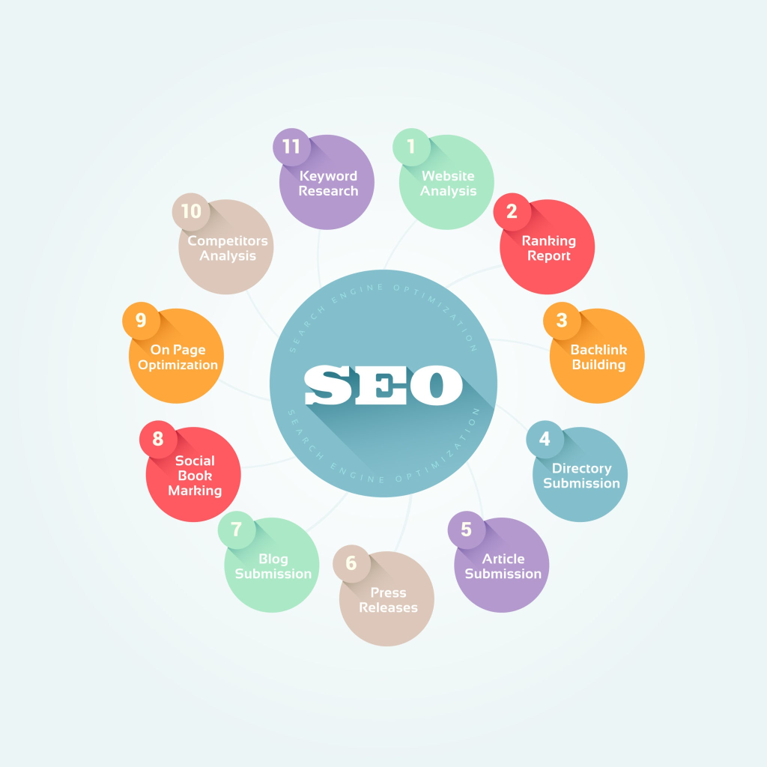
Building a profitable small business digital marketing strategy through organic search engine optimization requires a structured, repeatable roadmap:
- Execute High-Intent Keyword Mapping: Identify core operational search terms along with long-tail keyword phrases that indicate strong commercial and purchasing intent.
- Optimize Technical On-Page Structure: Construct clean URL paths, compelling title tags, concise meta descriptions, and organized Heading (H1–H3) hierarchies across all pages.
- Establish Core Local Infrastructure: Optimize your Google Business Profile, secure local business directory citations, and standardize regional business listings.
- Produce High-Depth Educational Content: Regularly publish detailed industry guides, product comparisons, buyer guides, and technical breakdown articles that solve real buyer pain points.
- Maintain Ongoing Technical Web Health: Ensure lightning-fast page loading speeds, repair broken links, enforce strict SSL security protocols, and fix crawl errors in Google Search Console.
- Build Contextual Backlink Authority: Develop strategic content relationships with industry publications, regional business chambers, technology portals, and vendor partners.
- Analyze Performance and Refine Strategy: Utilize Google Analytics and Search Console tools to track organic keyword growth, monitor conversion paths, and continually refine high-converting landing pages.
Driving Sustainable Expansion with SeeSam Solutions
───────────────────────────────────────────────────────
Search Engine Optimization is not a short-term marketing experiment or temporary tactic; it is an essential, long-term foundation for sustainable digital business growth. By investing in strategic keyword research, sound technical architecture, localized SEO strategies, and authoritative content creation, small and medium-sized enterprises can regularly win top search engine rankings over much larger corporate competitors.
At SeeSam Solutions, we help growing organizations turn technical strategies into measurable business outcomes. From modernizing workplace technology ecosystems and hardware infrastructure to executing targeted digital growth strategies, we provide expanding enterprises with the tools and insights needed to achieve sustainable market leadership. Securing top search engine visibility requires clear strategy, diligent technical execution, and ongoing content optimization. By building a strong organic search foundation today, your enterprise can capture high-intent search market share, outperform legacy competitors, and foster reliable commercial expansion for years to come.