
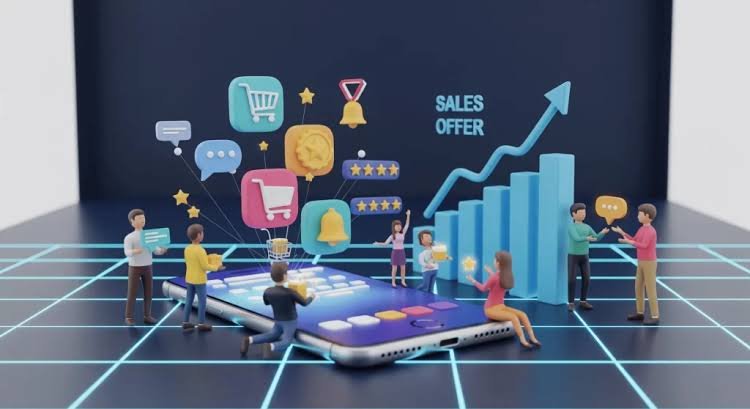
In today’s digital-first business environment, customer expectations are changing rapidly. People want businesses to be accessible, responsive, and easy to interact with at any time. Traditional communication channels such as phone calls, emails, and physical visits are still useful, but businesses increasingly need digital platforms that provide a faster and more personalized customer experience.
This is where mobile apps for customer engagement can make a significant difference. A well-designed mobile application gives businesses a direct digital channel through which they can communicate with customers, provide services, share information, offer personalized experiences, and build long-term relationships.
Mobile applications are no longer limited to large technology companies or consumer brands. Businesses across industries can use mobile apps to improve communication, simplify customer journeys, strengthen loyalty, and create more convenient ways for customers to interact with their products and services.
For businesses looking to modernize their digital presence, customer engagement through mobile apps can become an important part of their overall digital strategy.
What Is Customer Engagement?
Customer engagement refers to the ongoing interaction between a business and its customers. It goes beyond simply selling a product or providing a service. It involves creating meaningful experiences that encourage customers to interact with a brand before, during, and after a purchase.
Customer engagement can include activities such as:
- Interacting with a mobile application
- Reading personalized content
- Receiving product updates
- Using loyalty programs
- Contacting customer support
- Providing feedback
- Receiving personalized offers
- Completing purchases
- Booking appointments or services
- Participating in promotions
Strong customer engagement helps businesses remain connected with their audiences. Instead of relying only on occasional transactions, businesses can create continuous communication and interaction.
Why Mobile Apps Are Important for Customer Engagement
Smartphones have become an everyday part of consumers’ lives. Customers use mobile devices to communicate, shop, research products, access financial services, book appointments, order food, manage accounts, and interact with businesses.
A mobile app allows a company to become part of these everyday digital activities.
Unlike a website, which customers generally access through a browser, a mobile application can provide a more direct and convenient experience. Once installed, the app can remain easily accessible on the customer’s device.
Businesses can use apps to provide:
- Faster access to services
- Personalized content
- Direct communication
- Convenient account management
- Product recommendations
- Loyalty rewards
- Push notifications
- Customer support
- Special promotions
- Easy transactions
As a result, mobile apps for businesses can play an important role in creating consistent and convenient customer interactions.
1. Create a Direct Communication Channel
One of the biggest advantages of mobile applications is the ability to establish a direct communication channel with customers.
Businesses can use apps to communicate important information, introduce new services, announce promotions, provide order updates, or share relevant content.
Instead of depending entirely on social media algorithms or email campaigns, businesses can communicate with customers through their own digital platform.
For example, a retail business could use its mobile application to notify customers about new products. A healthcare organization could send appointment reminders, while a financial service provider could provide account notifications.
This direct connection can make communication more timely and relevant.
2. Use Push Notifications to Stay Connected
Push notifications are one of the most useful mobile app engagement strategies.
When used appropriately, push notifications allow businesses to communicate with customers even when they are not actively using the application.
Businesses can send notifications about:
- New products
- Special offers
- Appointment reminders
- Order status
- Important announcements
- Loyalty rewards
- Personalized recommendations
- Upcoming events
- Service updates
However, businesses should avoid sending excessive or irrelevant notifications. Too many notifications can frustrate customers and may encourage them to disable notifications or uninstall the application.
The goal should be to provide useful information at the right time.
3. Deliver a Personalized Customer Experience
Customers increasingly expect businesses to understand their needs and preferences.
Mobile applications can collect relevant interaction data, with appropriate consent and privacy practices, allowing businesses to create more personalized experiences.
For example, an e-commerce app may recommend products based on previous browsing or purchasing behavior. A food delivery application may highlight frequently ordered items. A loyalty application may provide rewards based on customer activity.
This demonstrates the value of mobile app personalization.
Personalization can help customers find relevant information faster and can make their interaction with a brand feel more useful.
Instead of presenting exactly the same experience to everyone, businesses can use customer preferences and behavior to provide more relevant content.
4. Improve Customer Convenience
Convenience is a major factor in modern customer experience.
Customers generally prefer processes that are simple, fast, and easy to understand. A mobile application can bring frequently used services together in one place.
For example, customers could use an app to:
- Place orders
- Track deliveries
- Book appointments
- Make payments
- Access account information
- Request support
- Check service status
- View offers
- Manage subscriptions
Reducing unnecessary steps can improve the overall customer journey.
This is an important part of mobile app customer experience because customers are more likely to engage with an application when it saves time and simplifies everyday tasks.
5. Strengthen Customer Loyalty
Customer engagement and customer loyalty are closely connected.
When customers repeatedly receive value from a mobile application, they may have more reasons to continue interacting with the business.
Businesses can create mobile-based loyalty programs that reward customers for purchases, referrals, reviews, or other activities.
For example, a restaurant could offer digital loyalty points. A retail company could provide app-exclusive rewards, while a service provider could offer special benefits to frequent customers.
These mobile app loyalty programs can encourage repeat interaction and give customers an additional reason to remain connected with the brand.
The effectiveness of a loyalty program depends on whether customers see genuine value in the rewards. Simply adding a points system is not enough; the program should be easy to understand and convenient to use.
6. Provide Faster Customer Support
Customer support is another area where mobile applications can improve engagement.
A business can integrate support features directly into its application. Customers may be able to access FAQs, submit support requests, communicate with representatives, or track the status of their issues.
For businesses with frequent customer inquiries, an app can also provide self-service options.
For example, customers could find answers to common questions without contacting support directly. This can make the overall experience faster and more convenient.
Better support can contribute to stronger customer relationships because customers know where to go when they need assistance.
7. Encourage Customer Feedback
Businesses need customer feedback to understand what is working and what needs improvement.
Mobile applications can make feedback collection easier by allowing customers to submit reviews, ratings, surveys, or suggestions directly through the app.
For example, after completing a service, an app could ask customers to rate their experience. A retail application could request feedback about a recent purchase.
This creates an ongoing feedback loop between the business and its customers.
Businesses can analyze this information to identify common concerns, understand customer preferences, and improve their products or services.
8. Make Customer Journeys More Interactive
Mobile applications can transform passive customers into active participants.
Instead of simply viewing information, customers can interact with features such as product configurators, quizzes, personalized dashboards, rewards, booking systems, interactive content, and real-time updates.
These interactive features can make the customer journey more engaging.
For example, a fitness application may allow users to track their progress, while an education platform can provide interactive learning activities.
The more useful and relevant the interaction is, the more opportunities a business has to maintain customer engagement.
9. Support Customer Retention
Acquiring new customers is important, but retaining existing customers is equally significant for long-term business growth.
Customer retention through mobile apps can be supported by maintaining regular and meaningful interactions.
An application can remind customers about services, introduce relevant products, provide personalized recommendations, and reward continued engagement.
For example, a subscription-based business can use its app to help customers manage their subscriptions and discover additional services.
The objective is not simply to keep sending promotional messages. Instead, the application should consistently provide value so customers have a practical reason to return.
10. Create App-Exclusive Experiences
Businesses can also use mobile applications to provide experiences that customers cannot easily access elsewhere.
These could include:
- App-only discounts
- Early access to products
- Exclusive content
- Digital loyalty cards
- Personalized recommendations
- Special events
- Faster booking
- Exclusive customer support
App-exclusive experiences can give customers an additional incentive to download and continue using the application.
However, exclusivity should complement the overall customer experience rather than create unnecessary barriers.
11. Integrate Mobile Apps With Other Digital Channels
A mobile application should not operate in isolation.
Businesses can create stronger customer journeys by connecting their applications with their websites, social media channels, CRM systems, email marketing, customer support platforms, and other digital services.
For example, a customer might discover a product through social media, visit the company website for additional information, download the mobile app, make a purchase, and then receive order updates through the application.
A connected digital ecosystem creates a more consistent experience across different touchpoints.
This is particularly important for businesses implementing broader customer engagement solutions.
12. Use Data to Understand Customer Behavior
Mobile applications can provide businesses with valuable insights into customer interactions.
Depending on the app and the data practices involved, businesses can analyze information such as:
- Frequently used features
- Customer preferences
- Purchase patterns
- Engagement levels
- App usage trends
- Customer feedback
- Conversion activity
These insights can help businesses make informed decisions.
For example, if customers frequently abandon a particular step in the purchasing process, the business may investigate whether that part of the app needs improvement.
Data should always be collected and used responsibly, with appropriate privacy, security, consent, and regulatory considerations.
13. Improve the Overall Customer Experience
A mobile application should ultimately make customers’ interactions with a business easier and more useful.
This means focusing on the entire customer journey rather than simply adding as many features as possible.
A successful application should generally offer:
- Simple navigation
- Fast performance
- Clear information
- Easy account management
- Secure transactions
- Responsive design
- Helpful support
- Relevant notifications
- Personalized experiences
A complicated application can have the opposite effect. If customers struggle to find what they need, engagement may decrease.
Therefore, user experience should remain a central part of every mobile app strategy.
Mobile App Marketing and Customer Engagement
Mobile app marketing can help businesses attract users and encourage continued engagement.
Businesses can promote their applications through:
- Websites
- Search engines
- Social media
- Email campaigns
- Digital advertising
- QR codes
- In-store promotions
- Existing customer communication
However, app downloads should not be the only goal.
Businesses should also focus on activation, regular usage, retention, and customer satisfaction.
For example, getting thousands of downloads is less meaningful if most users stop using the application after their first interaction.
A successful mobile strategy therefore combines acquisition with long-term engagement.
What Makes a Mobile App Successful?
Not every mobile application automatically improves customer engagement.
The application should solve a genuine customer problem or provide meaningful value.
Before developing an app, businesses should consider:
- Clear Purpose
- Target Audience
- Simple User Experience
- Useful Features
- Performance
- Security
- Personalization
- Continuous Improvement
Can customer feedback and usage data be used to improve the application over time?
These considerations can help businesses create applications that support meaningful customer engagement.
How SeeSam Solutions Can Help Businesses With Digital Transformation
Businesses looking to implement mobile apps for customer engagement need more than just an application interface. A successful mobile solution should fit into the organization’s broader digital ecosystem and business objectives.
SeeSam Solutions can help businesses explore and implement technology-driven solutions that support digital transformation and more efficient customer interactions.
From understanding business requirements to supporting digital technology initiatives, SeeSam Solutions can help organizations identify solutions that align technology with operational and customer needs.
A mobile application can also be connected with other business technologies and digital platforms to create a more integrated customer experience.
For organizations considering business mobile applications, the focus should therefore be on how the technology can support real business processes, improve accessibility, and create value for customers.
The Future of Mobile App Customer Engagement
Mobile applications are continuing to evolve as businesses adopt new digital technologies.
Future applications are likely to place even greater emphasis on personalization, automation, artificial intelligence, real-time communication, digital payments, and connected customer experiences.
Businesses may increasingly use intelligent systems to understand customer needs and deliver relevant experiences at the right time.
At the same time, privacy and security will remain important considerations. Customers want convenience, but they also expect businesses to handle their information responsibly.
The future of customer engagement through mobile apps will therefore depend on balancing personalization and convenience with transparency, security, and customer trust.
Conclusion
Mobile applications have become an important digital channel for businesses that want to create stronger and more convenient customer relationships.
From direct communication and push notifications to personalization, loyalty programs, customer support, feedback, and convenient access to services, there are many ways mobile apps for customer engagement can support modern customer experiences.
However, successful engagement is not simply about launching an application. Businesses need to understand their customers, identify genuine problems, provide useful features, and continuously improve the experience.
A well-planned application can become an important part of a company’s broader digital ecosystem and help create meaningful interactions throughout the customer journey. For businesses exploring digital transformation and mobile apps for businesses, SeeSam Solutions can help identify technology-driven approaches that align with business requirements and customer needs.